| Provider | WOHR PARKING SYSTEMS |
| Purpose | Essential cookies enable basic functions and are necessary for the proper functioning of the website. |
| Privacy Statement | https://woehr.de/de/datenschutz.html |
| Names | PHPSESSID, csrf_contao_csrf_token, csrf_https-contao_csrf_token |
| Lifetime | When ending the browser session. |
 UK-based company
 WÖHR Exclusive Partner





















Enable Youtube content
Yes, I would like to have content from Youtube displayed. I agree that by doing so, my personal data will be passed on to the operator of the portal from which the content originates, so that they can analyze my behavior. You can find more information in our privacy policy
Accept

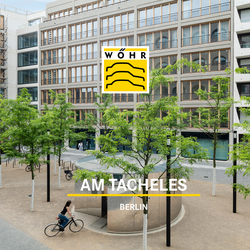
AM TACHELES / Berlin, Germany / Bikesafe
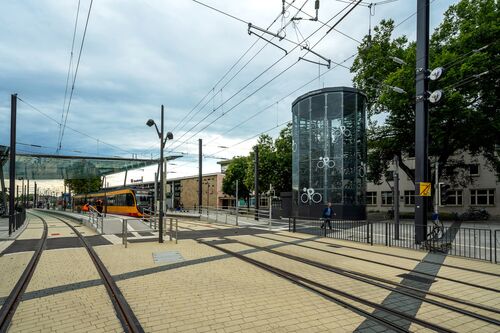
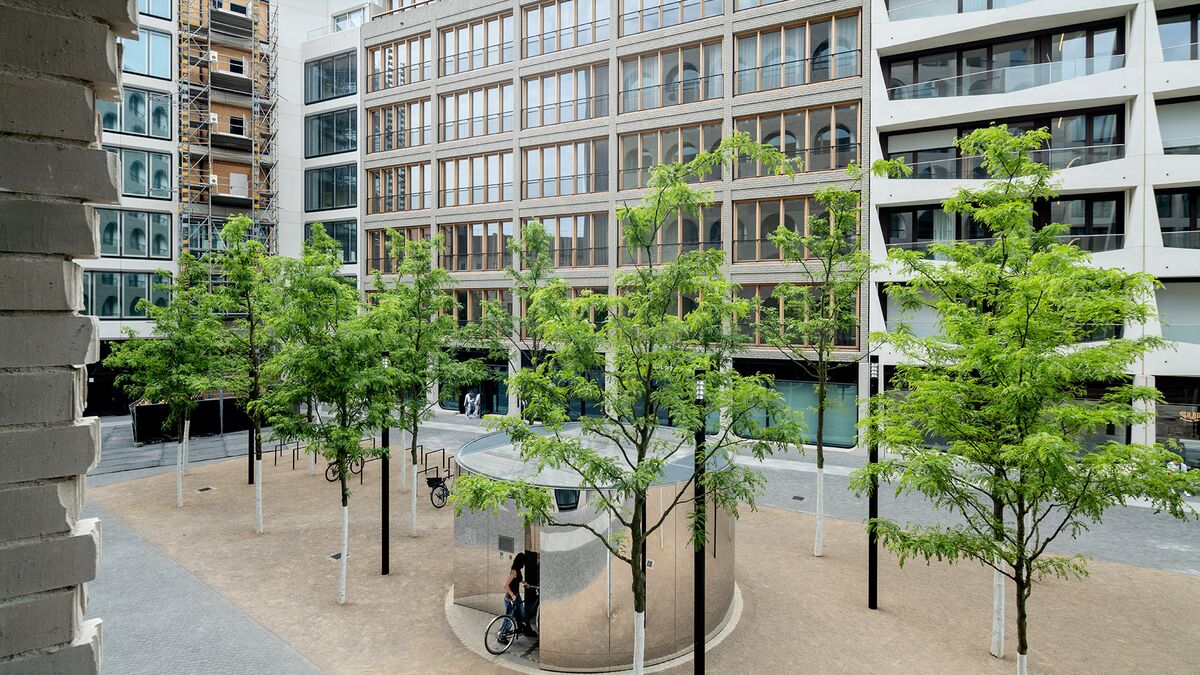
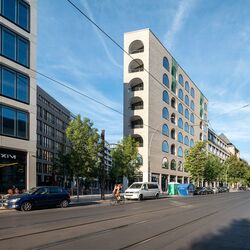
Compared to many similar new-build neighbourhoods in Berlin, the square in the new AM TACHELES district has its own unique quality thanks to its shape, opening, façade design and planting. As a small highlight, there is a mirrored cylinder in the centre that provides space for bicycles.
For many after the fall of the Wall, the great symbol of artistic freedom in an inspiring place in Berlin: the Tacheles, an open building originally occupied in the 1990s and then self-managed by the art scene in a prominent location on Oranienburger Strasse with a wasteland behind it that stretches all the way to Friedrichstrasse. The partially ruined remains of the Friedrichstadtpassage with its huge archway, which was saved from planned demolition by the artists, quickly developed into a Berlin tourist magnet. At the end of the 1990s, the building lost its appeal to the art scene and the derelict site became increasingly desirable. The state of Berlin finally sold the entire site to the Fundus Group in 2002 on the condition that it could only be vacated after ten years. When the time came, the Tacheles was completely empty.
In 2014, the ownership changed hands and the project developer pwr development took over the project. Herzog [&] de Meuron were commissioned to develop a masterplan for the redesign and revitalisation of the entire site, which was based on an initial masterplan from 2003 with significant changes. Even the visualisations of the city block with the new passageway, which follows the old route, made the clear overall concept around it clear. The architects from Basel initially wanted to fill the block completely and then ‘cut out a sequence of differently proportioned squares, courtyards and paths’.
Today, AM TACHELES combines this history with contemporary architecture, culture, gastronomy, shopping and urban life. Herzog & de Meuron developed the masterplan for the redevelopment of the entire site. The urban quarter opens up the formerly enclosed block with a sequence of squares, courtyards, passageways and paths of varying proportions, creating new links between Oranienburger Straße, Friedrichstraße and Johannisstraße.
A central feature of the quarter is the listed former Kunsthaus Tacheles on Oranienburger Straße. Following extensive refurbishment and redevelopment, it is now home to Fotografiska Berlin. This international museum of contemporary photography, art and culture combines exhibitions and a cultural programme with dining options and facilities open until late in the evening. The building houses, amongst other things, the Verōnika restaurant and the Clara bar.
The historic buildings and the new developments together form the AM TACHELES urban quarter. A variety of architectural styles, green façades and connecting bridges, open passageways and the diversely designed outdoor spaces create a neighbourhood that deliberately opens up to the city. Retail, dining, culture, offices and other urban uses complement one another, making AM TACHELES a vibrant part of Berlin-Mitte.
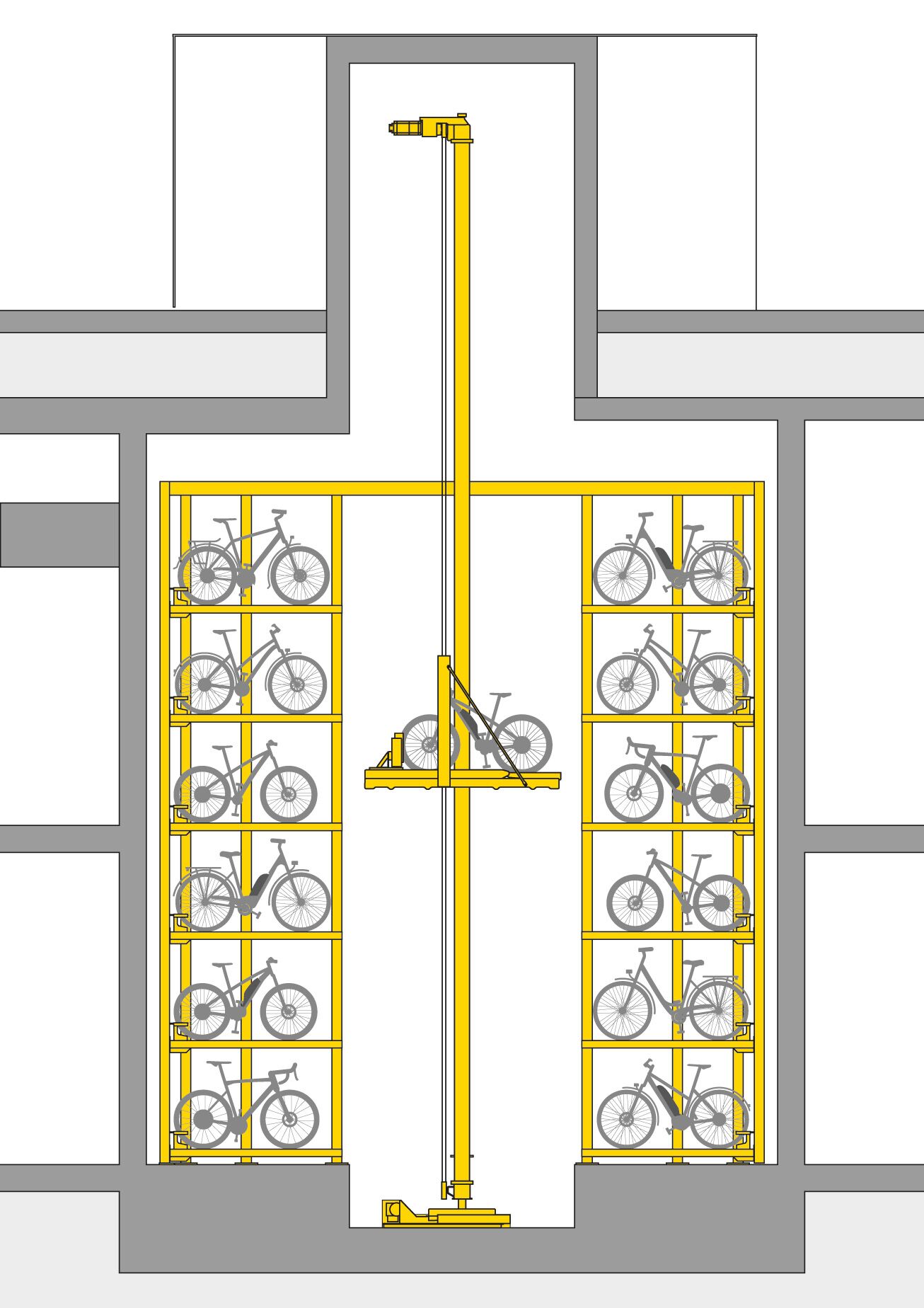
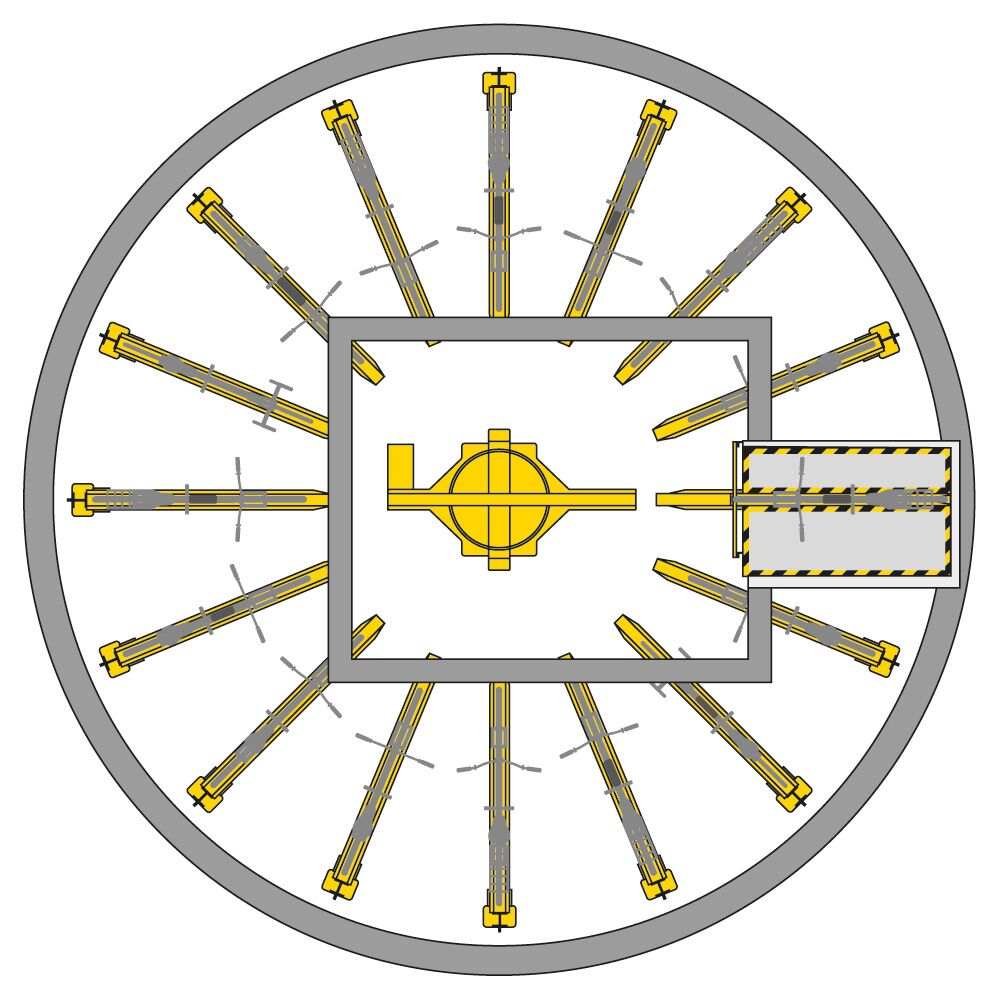
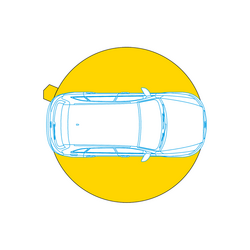
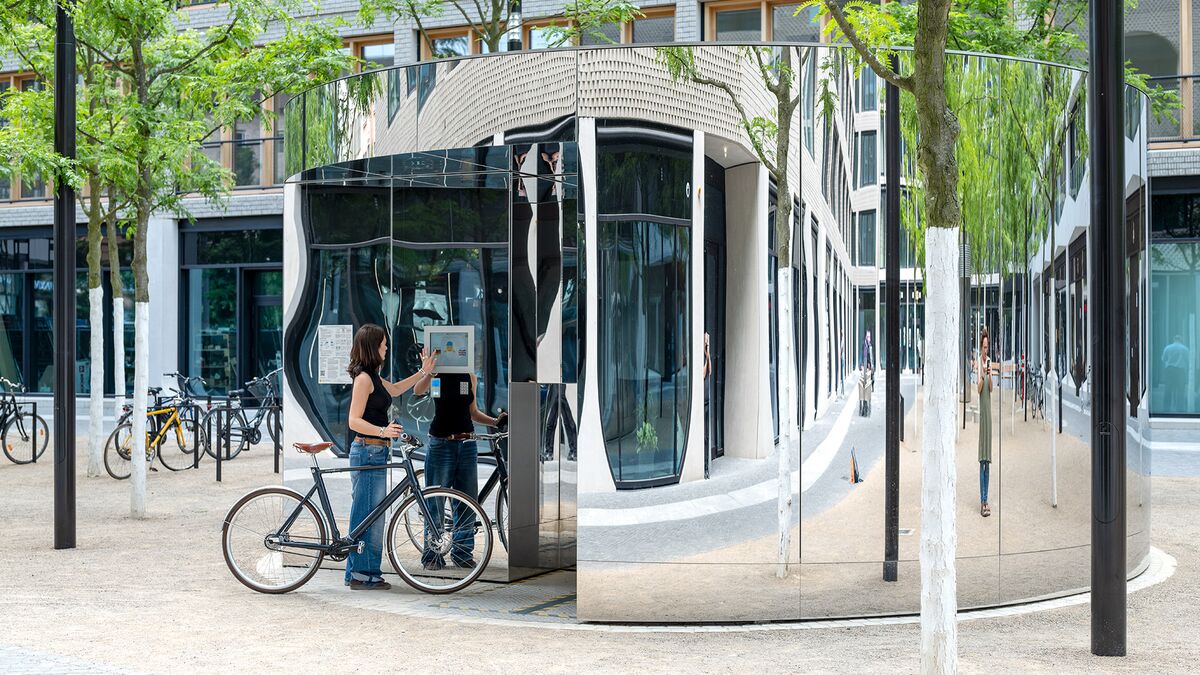
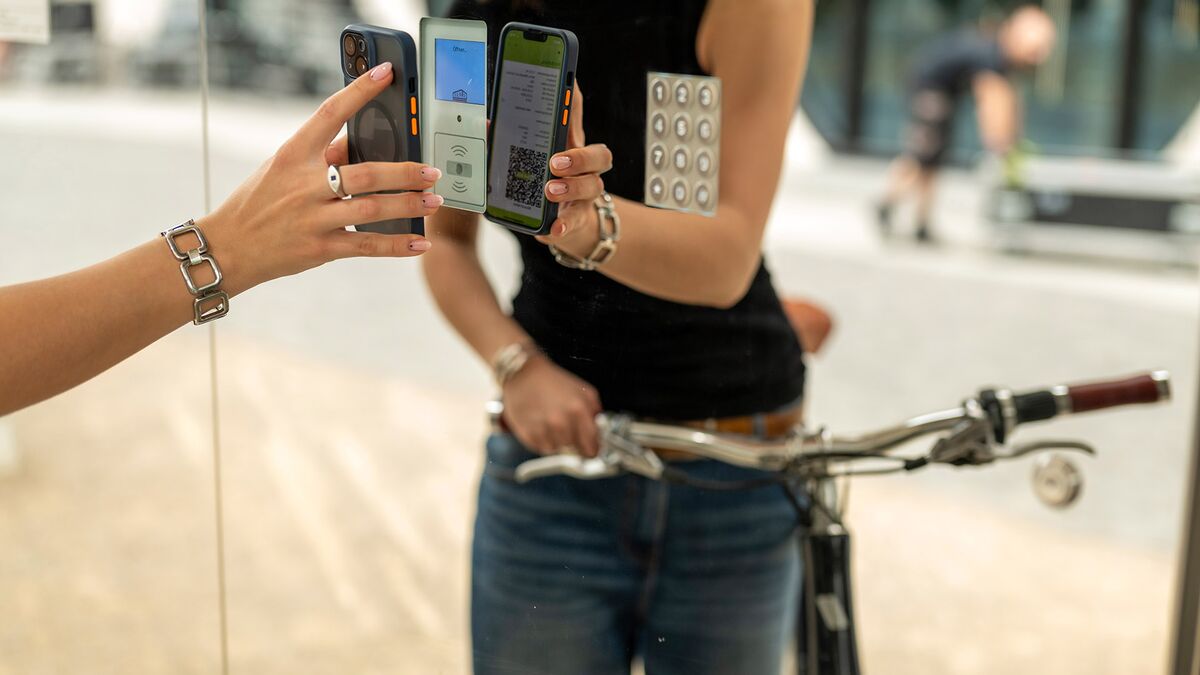
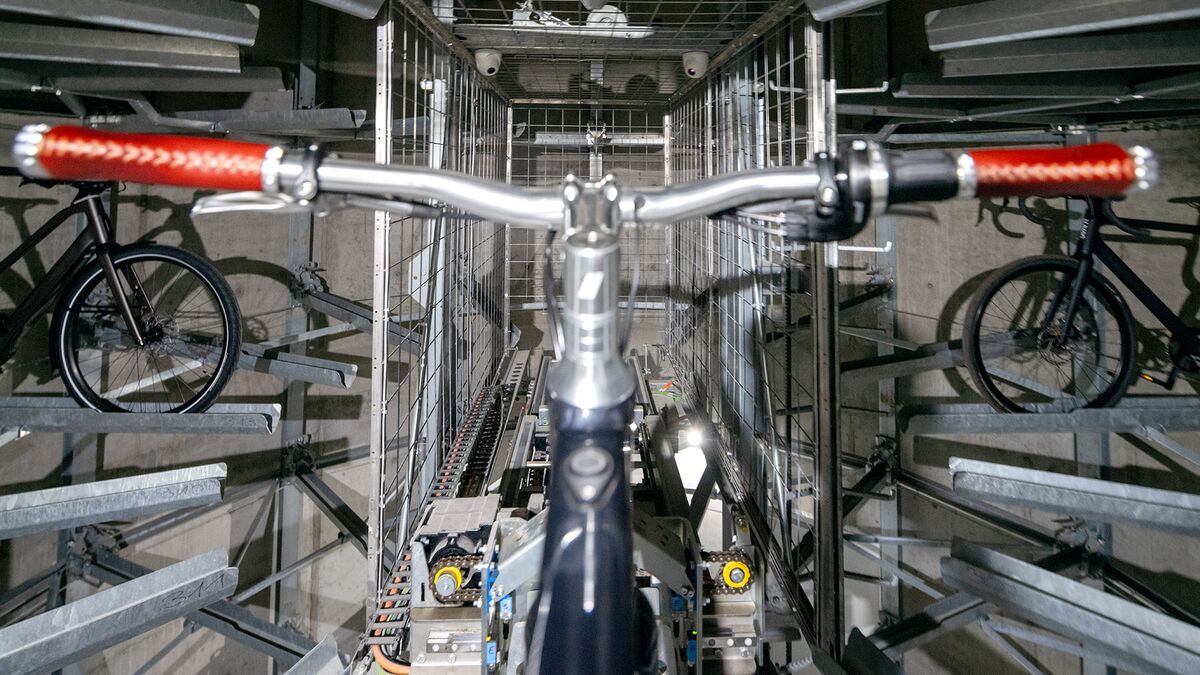
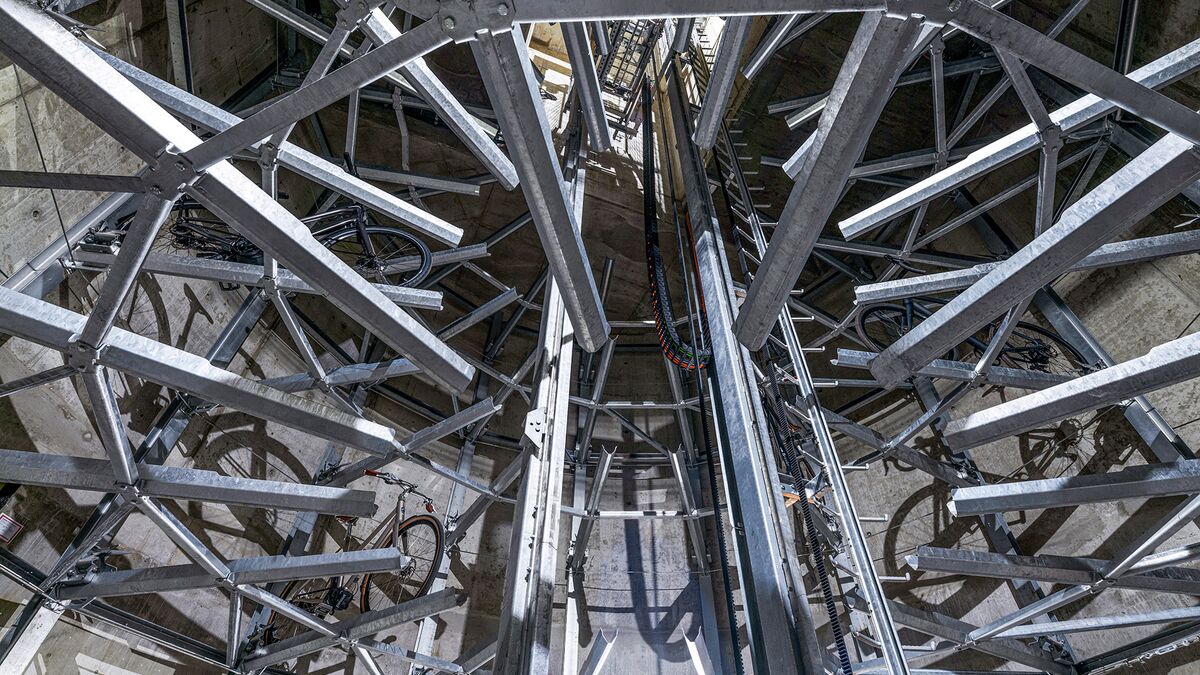
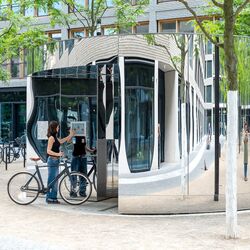
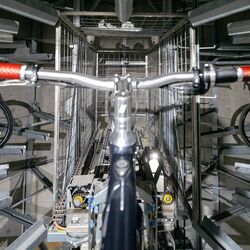
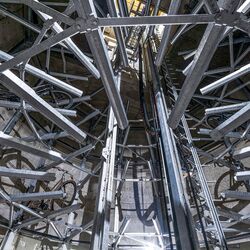
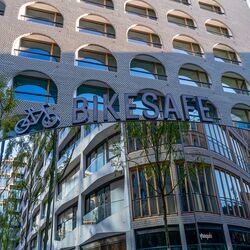
In the centre of the newly created Aaron-Bernstein-Platz stands a mirrored , which initially catches the eye but then makes its presence felt among the trees and - like Norman Foster's mirrored roof at the Old Port of Marseille - arouses curiosity. The round building is a Bikesafe, a fully automatic bicycle station of particular elegance. It offers space for 96 bicycles, which are stored securely and weatherproof under the square. The transfer area with the entrance gate on the square is operated by chip or QR code. After opening, the front wheel is placed on a rail and the bike is pulled into the gate. The gate closes again automatically and the parking process is completed after approx. 20 seconds. The new ‘AM TACHELES’ neighbourhood has another small highlight in the form of the glittering sunlight.
In this way, Bikesafe combines functionality and sustainable urban mobility with the architectural ethos of the neighbourhood. The cylinder, which reflects the sun’s rays, adds a subtle yet distinctive touch to Aaron-Bernstein-Platz and brings another special detail to AM TACHELES.
PROJECT SPECIFICATIONS:
- WÖHR Bikesafe 885
- 96 bicycle parking spaces
- 6 levels
- Handlebar widths up to max. 76 cm
- Bicycle length up to max. 2 m
- Bicycle weight up to max. 30 kg
- Operation via booking platform or RFID chip
Project plans